
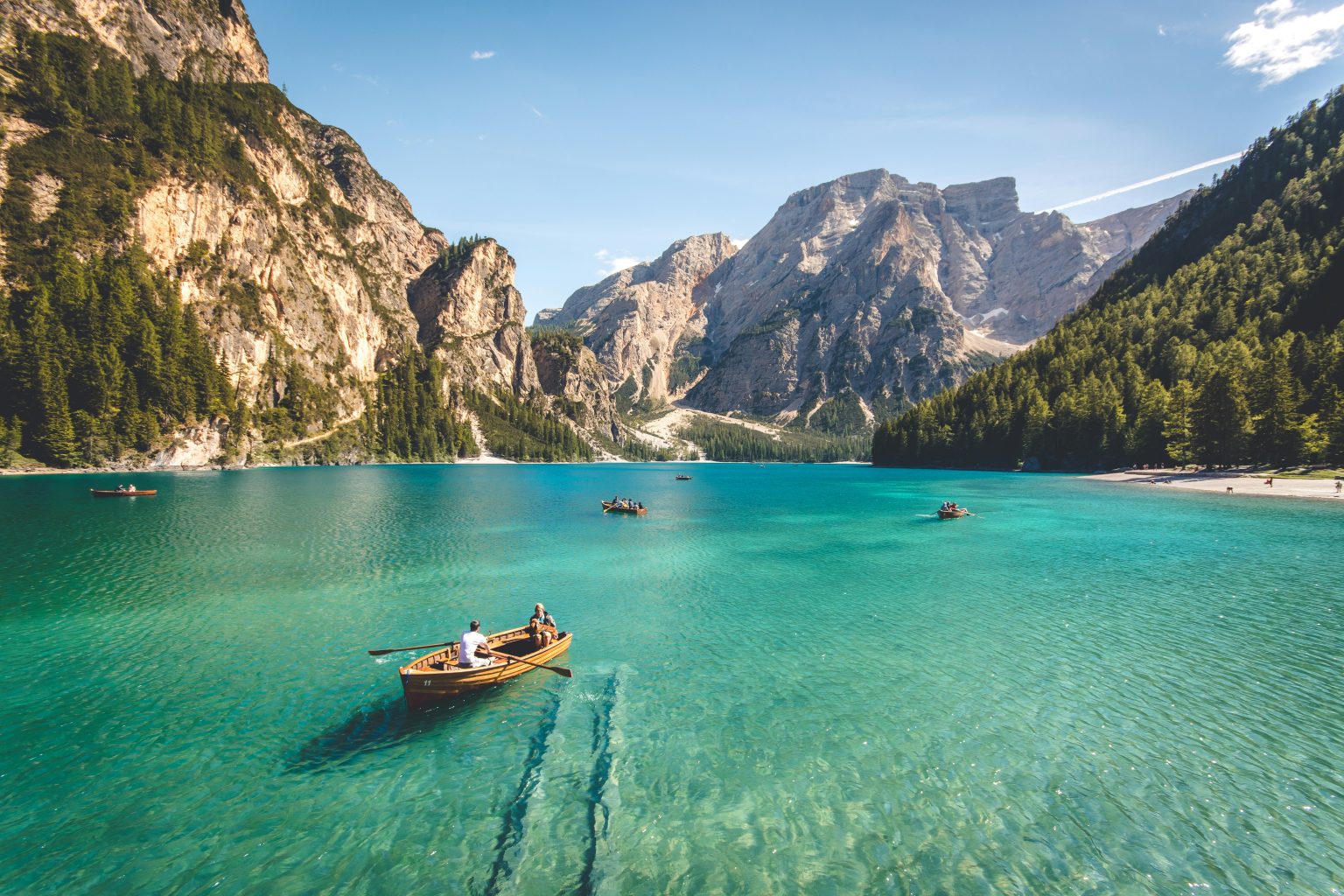
As we navigate the opening days of January 2026, the global travel landscape feels fundamentally different from the frantic energy of years past. Today, on January 5, 2026, I find myself looking back at a decade of exploration and realizing that the most profound shifts in my perspective did not happen while I was rushing between landmarks. They happened during the quiet weeks spent in a single neighborhood, the long train journeys across borders, and the slow mornings watching a city wake up.
- Moving Beyond the High Speed Itinerary
- The Social Value of Staying Put
- Ecological Stewardship and the Rail Renaissance
- Financial Advantages of the Slow Method
- Mental Health and the Psychological Reset
- The New Nomadism: Digital Visas in 2026
- A Practical Guide to Slowing Down
- The Transformation of the “Traveler”
For a long time, travel was about the “more.” More cities, more photos, more stamps in a passport that felt like a trophy room. But in this new era of 2026, where “quietcations” and “micro retirements” have become the dominant trends, the world is finally embracing the art of slowing down. This shift is not just about a change in itinerary: it is a radical redefinition of how we relate to the planet and to ourselves.

Moving Beyond the High Speed Itinerary
The early 2020s were characterized by a desperate need to make up for lost time, leading to a surge in “revenge travel” that prioritized quantity over quality. We saw people attempting to see five European capitals in ten days, a pace that left travelers exhausted and locals frustrated. However, as we enter 2026, data from major travel platforms shows a 23 percent increase in bookings for trips lasting more than eight days. People are finally realizing that when you move at high speed, the world becomes a blur of indistinguishable hotel lobbies and airport terminals.
Slow travel is the antidote to this exhaustion. It is the choice to spend two weeks in a single village in the Noto Peninsula of Japan rather than a three day dash through Tokyo and Osaka. When you commit to a single place, you stop being a spectator and start becoming a temporary resident. You begin to notice the subtle rhythms of a community: the specific time the baker opens his doors, the way the light hits a particular plaza at dusk, and the familiar faces of the people you pass on your way to the market.
This intentionality changes the very nature of discovery. Instead of checking off a pre determined list of viral locations, you allow the destination to reveal itself to you. You find the hidden garden that has no tag on social media. You have a three hour lunch in a family run trattoria where the menu is never written down. These are the moments that stick, far longer than the thirty seconds spent fighting for a selfie in front of a famous monument.
The Social Value of Staying Put
One of the most significant ways slow travel changed my worldview was by deepening my connection to people. In the “fast travel” model, interactions with locals are often transactional: a quick question about directions, a payment at a souvenir shop, or a brief conversation with a tour guide. There is rarely enough time for a genuine human connection to form.
In 2026, the rise of “Wellness Through Community” has highlighted how vital these connections are for our mental health. When you stay in a place for a month, you have the opportunity to build what sociologists call “weak ties” with the people around you. These are the acquaintances who recognize you at the coffee shop or the neighbor who nods to you from their balcony. These small interactions ground us and provide a sense of belonging that is impossible to achieve when you are constantly on the move.
Case Study: A Month in the Puglia Region
To illustrate this, consider my experience spending thirty days in the Puglia region of Italy. During the first week, I was still in “tourist mode,” frantically searching for the best beaches and the most picturesque towns. By the third week, my focus had shifted entirely. I spent my afternoons learning how to make orecchiette from a woman named Maria who lived three doors down. We didn’t speak the same language fluently, but the slow pace of our afternoons allowed us to communicate through gestures, shared laughter, and the tactile work of shaping pasta.
| Feature | Fast Travel (3 Days) | Slow Travel (30 Days) |
| Interaction Level | Transactional | Relational |
| Dining | Tourist oriented restaurants | Local markets and home cooking |
| Knowledge | Surface level landmarks | Deep cultural nuances |
| Stress Level | High (logistics focused) | Low (immersion focused) |
| Cost per Day | 250 Dollars | 85 Dollars |
Through Maria and her family, I learned more about the history, the struggles, and the joys of that region than any guidebook could ever convey. I saw the world through her eyes, a perspective that was rooted in generations of tradition and a deep love for the land. This is the true gift of slow travel: it humanizes the “other” and reminds us of our shared humanity.

Ecological Stewardship and the Rail Renaissance
As we move through 2026, the environmental impact of our travel choices has moved from the periphery to the center of the conversation. “Climate anxiety” is a real factor for many modern explorers, particularly the younger generations. Slow travel offers a tangible way to align our wanderlust with our values.
The “Rail Revival” of 2026 is perhaps the most exciting development in this space. This year, we are seeing a massive expansion of high speed and sleeper train routes across Europe and Asia. On March 26, 2026, the new European Sleeper route from Paris to Berlin will launch, offering a luxurious and sustainable alternative to the short haul flight. By choosing the train over the plane, travelers are reducing their carbon footprint by up to 90 percent.
But the benefit of the train is not just ecological. The journey itself becomes a meditative experience. Instead of the stress of security lines and cramped middle seats, you have the rhythm of the tracks and the changing landscape outside your window. You see the transition from the rolling hills of France to the industrial heart of Germany. You have time to read, to think, and to slowly transition your mind into the “travel state.” Slow travel teaches us that the journey is not a hurdle to be cleared, but a vital part of the story.
Financial Advantages of the Slow Method
While slow travel is often discussed in philosophical terms, the economic reality is equally compelling. In the current 2026 economy, travel costs have stabilized but remain significant. Slow travel is, quite simply, the most cost effective way to see the world.
When you stay in one place for a longer duration, you unlock a different tier of pricing. Most rental platforms like Airbnb or specialized “slow stay” sites offer deep discounts for stays of 28 days or longer, sometimes reducing the nightly rate by as much as 50 percent. Furthermore, you eliminate the massive expenses associated with frequent transportation. If you are not buying a new flight or train ticket every three days, your budget stretches significantly further.
“True luxury in 2026 is not found in the price of the hotel room, but in the abundance of time. To have the freedom to stay is the ultimate status symbol.”
By shopping at local markets and cooking some of your own meals, you also avoid the “tourist tax” that comes with eating every meal in a restaurant. You begin to understand the local economy and support small businesses that truly benefit from your presence, rather than global chains that extract wealth from the community.

Mental Health and the Psychological Reset
In early 2026, a significant body of research has emerged linking slow travel to improved mental health. A study published in November 2025 by the Journal of Psychological Research found that travelers who stayed in one location for more than ten days showed a 40 percent reduction in cortisol levels compared to those on fast paced itineraries.
The “psychological reset” that occurs during slow travel is profound. Modern life is characterized by “directed attention fatigue,” where our brains are constantly overstimulated by screens, notifications, and the pressure of productivity. Slow travel allows for “involuntary attention,” the kind of effortless focus we experience when we look at a sunset or watch the tide come in.
This mental space allows for deep reflection and “identity work.” When we are removed from our familiar social roles and the expectations of our daily lives, we have the opportunity to rediscover who we are outside of our professional titles or family responsibilities. Slow travel is not just an escape from the world: it is a return to ourselves.
The New Nomadism: Digital Visas in 2026
The ability to travel slowly has been greatly facilitated by the global explosion of digital nomad visas. As of January 2026, over 66 countries offer specific permits for remote workers, including newcomers like Japan and South Africa.
This has created a new class of “slowmads” who spend three to six months in a country, fully integrating into the local lifestyle while maintaining their professional lives. This balance is crucial. Instead of a frantic “workation” where you are trying to see the sights in between Zoom calls, the slow traveler works their normal hours and uses their evenings and weekends to explore their temporary home at a leisurely pace.
2026 Digital Nomad Visa Snapshots
- Spain: Requires a monthly income of 2,763 euros. It offers a 20 percent tax cap and a path to permanent residency after five years.
- Portugal (D8): Requires a monthly income of 3,480 euros. It remains a top choice for its mild climate and strong coworking infrastructure.
- Japan: The newly launched 2026 visa requires an annual income of 10 million yen. It is perfect for those who want to experience the “satoyama” lifestyle of the rural Noto Peninsula.
- South Africa: A popular choice for those looking for “cool climate” travel during the northern hemisphere’s summer, requiring a monthly income of 54,000 rand.
These visas are a recognition by governments that slow travelers are high value visitors. They contribute more to the local economy over time and create fewer burdens on infrastructure than the mass tourism model.

A Practical Guide to Slowing Down
If you are inspired to transition from a fast traveler to a slow one, the process requires a shift in mindset more than a shift in gear. Here is how I structured my recent journeys to prioritize depth over breadth.
The One Week Rule
My primary rule for 2026 is never to stay in a location for less than one week. If a destination is worth visiting, it is worth seeing on a Tuesday morning and a Friday night. One week is the minimum amount of time required to move past the surface level “tourist” experience and begin to understand the local culture.
The Radius Method
Instead of traveling between major cities, I select one “base” city and explore everything within a fifty mile radius. This allows for day trips by local bus or bike, which are far more immersive than long distance flights. In Puglia, my base was the city of Lecce. From there, I could visit dozens of smaller towns and coastal areas, returning to my familiar apartment every night. This provides a sense of stability that makes the exploration feel more grounded.
Embodying the “Quietcation”
In early 2026, the “quietcation” has become a buzzword for a reason. It involves intentionally choosing destinations that are “non viral.” I actively avoid places that are currently trending on TikTok or Instagram. Instead, I look for regions that offer “wild wellness,” such as the Carpathian Mountains in Romania or the lesser known spa towns in Slovenia. These places offer the silence and space that are increasingly rare in our hyper connected world.
The Transformation of the “Traveler”
The most significant change slow travel brought me was the realization that I am no longer a “tourist.” A tourist is a consumer of experiences, someone who takes from a destination and leaves with a few photos and a souvenir. A traveler, in the slow sense, is a participant.
By slowing down, I stopped looking at the world as a background for my life and started seeing it as a complex, beautiful, and fragile system that I am a part of. I learned that the best part of traveling is not what you see, but who you become in the process. You become more patient. You become more observant. You become more comfortable with silence and with your own company.
As we stand at the beginning of 2026, I encourage you to look at your travel plans for the coming year. Instead of asking “How many places can I see?” ask “How deeply can I experience one place?” The world is not going anywhere. It will still be there next year, and the year after that. But the version of you that emerges from a month of slow, intentional living will be a version that sees the world with newfound clarity and compassion.
The true goal of travel in 2026 is not to change your scenery, but to change your soul. And that is a journey that cannot be rushed.