




Vietnam is a country that feels like a living poem, written in the emerald green of its rice paddies and the deep indigo of its mountain ranges. On January 5, 2026, it stands as a testament to resilience and grace, a place where the echoes of a complex history harmonize with the vibrant energy of a modern, forward looking nation. Stretching over sixteen hundred kilometers from the Chinese border to the Gulf of Thailand, Vietnam is an elongated tapestry of landscapes, flavors, and stories.
- The Northern Cradle: High Peaks and Ancient Alleys
- The Central Heritage: Imperial Splendor and Coastal Calm
- The Southern Pulse: Modern Energy and River Rhythms
- Ho Chi Minh City: The Beating Heart
- The Mekong Delta: The Rice Bowl
- The Tropical Escape: Phu Quoc and Con Dao
- Practical Wisdom for the 2026 Traveler
- 1. The Art of the Slow Journey
- 2. Digital Minimalism and Local Connection
- 3. Respect the Sacred and the Social
- 4. Lean into the Culinary Adventure
- 5. Sustainable Choices
- The Soul of 2026
In 2026, the travel landscape in Vietnam has matured. There is a profound shift toward sustainable eco tourism and high end cultural heritage experiences. Travelers are no longer just passing through; they are staying longer, moving slower, and seeking the “authentic” in the quiet corners of the provinces. This guide serves as your compass through the northern, central, and southern regions, highlighting the essential experiences that define this captivating land.

The Northern Cradle: High Peaks and Ancient Alleys
Northern Vietnam is where the soul of the nation was born. It is a region of dramatic verticality, where limestone peaks pierce the clouds and ancient traditions are preserved in the mist.
Hanoi: The City of the Soaring Dragon
Hanoi, the capital, is an assault on the senses in the best possible way. In 2026, the city has successfully integrated modern infrastructure while preserving the chaotic charm of its Old Quarter. This neighborhood, a maze of thirty six streets named after the guilds that once occupied them, remains the heart of the city. Walking through these alleys at dawn, you will see the city wake up: elderly residents practicing Tai Chi by Hoan Kiem Lake, the steam rising from a thousand Pho pots, and the frantic dance of motorbikes beginning their day.
Must visit landmarks include the Temple of Literature, a serene complex that served as the first university in Vietnam in 1070, and the Ho Chi Minh Mausoleum. For a modern cultural fix, the Hanoi Opera House hosts world class performances that blend Western classical music with traditional Vietnamese instruments. Do not leave without trying “Egg Coffee” in a hidden lakeside cafe, a creamy, decadent invention that is uniquely Hanoian.
Ha Long Bay and Lan Ha Bay
Ha Long Bay is a UNESCO World Heritage site and a natural wonder that defies description. Thousands of limestone karsts rise from the jade green waters, creating a seascape that feels like a scene from a fantasy novel. In 2026, luxury overnight cruises have become the standard, offering a way to see the bay without the day trip crowds.
However, for those seeking more solitude, Lan Ha Bay has emerged as the sophisticated alternative. Located just south of Ha Long, it offers the same spectacular scenery but with fewer boats. Here, you can kayak into hidden lagoons, visit the Cua Van floating village, and watch the sunset from the deck of a traditional wooden junk. The focus in Lan Ha is on low impact travel, ensuring the marine ecosystem remains pristine.
The Terraces of Sapa and Ha Giang
For the adventurous, the far north offers the most breathtaking landscapes in Southeast Asia. Sapa is famous for its tiered rice terraces that shimmer like gold during the harvest season. While the main town is bustling, trekking into the Muong Hoa Valley allows you to stay in ethnic minority homestays, where the hospitality of the Hmong and Red Dao people is legendary.
Further east lies Ha Giang, home to the legendary Ma Pi Leng Pass. Known as the “King of Passes,” it offers jaw dropping views of the Nho Que River winding through a deep canyon. The Ha Giang Loop is a journey for those who love the open road, providing an unfiltered look at rural life in the highlands.
The Central Heritage: Imperial Splendor and Coastal Calm
Central Vietnam is a region of elegance and history. It is where the mountains meet the sea, and where the remnants of the Champa and Nguyen dynasties still stand.
Hue: The Imperial City
Once the capital of Vietnam, Hue is a city of poetry and quiet dignity. The sprawling Imperial Citadel is a UNESCO site that allows you to walk through the moats and gates of the former royal residence. In 2026, Hue has leaned heavily into its culinary heritage, offering “Royal Cuisine” experiences where dishes are prepared with the same intricacy once reserved for emperors.
A dragon boat ride along the Perfume River at dusk is a quintessential Hue experience. You can stop at the Thien Mu Pagoda, an iconic seven story temple that overlooks the water, and visit the intricately decorated royal tombs of Khai Dinh and Tu Duc, which are masterpieces of stone and mosaic.
Hoi An: The Lantern Lit Dream
Hoi An is perhaps the most charming town in all of Asia. A former trading port, its Ancient Town is a kaleidoscope of yellow merchant houses, Japanese bridges, and Chinese assembly halls. At night, the town is illuminated by thousands of silk lanterns, casting a soft, romantic glow over the cobblestone streets.
In 2026, Hoi An remains the destination for bespoke tailoring. You can have a suit or a silk dress made in forty eight hours by some of the most skilled artisans in the world. Beyond the shops, the surrounding countryside is perfect for cycling. You can ride through the Tra Que vegetable village or take a bamboo basket boat through the coconut palm forests of Cam Thanh.
Da Nang: The Modern Coast
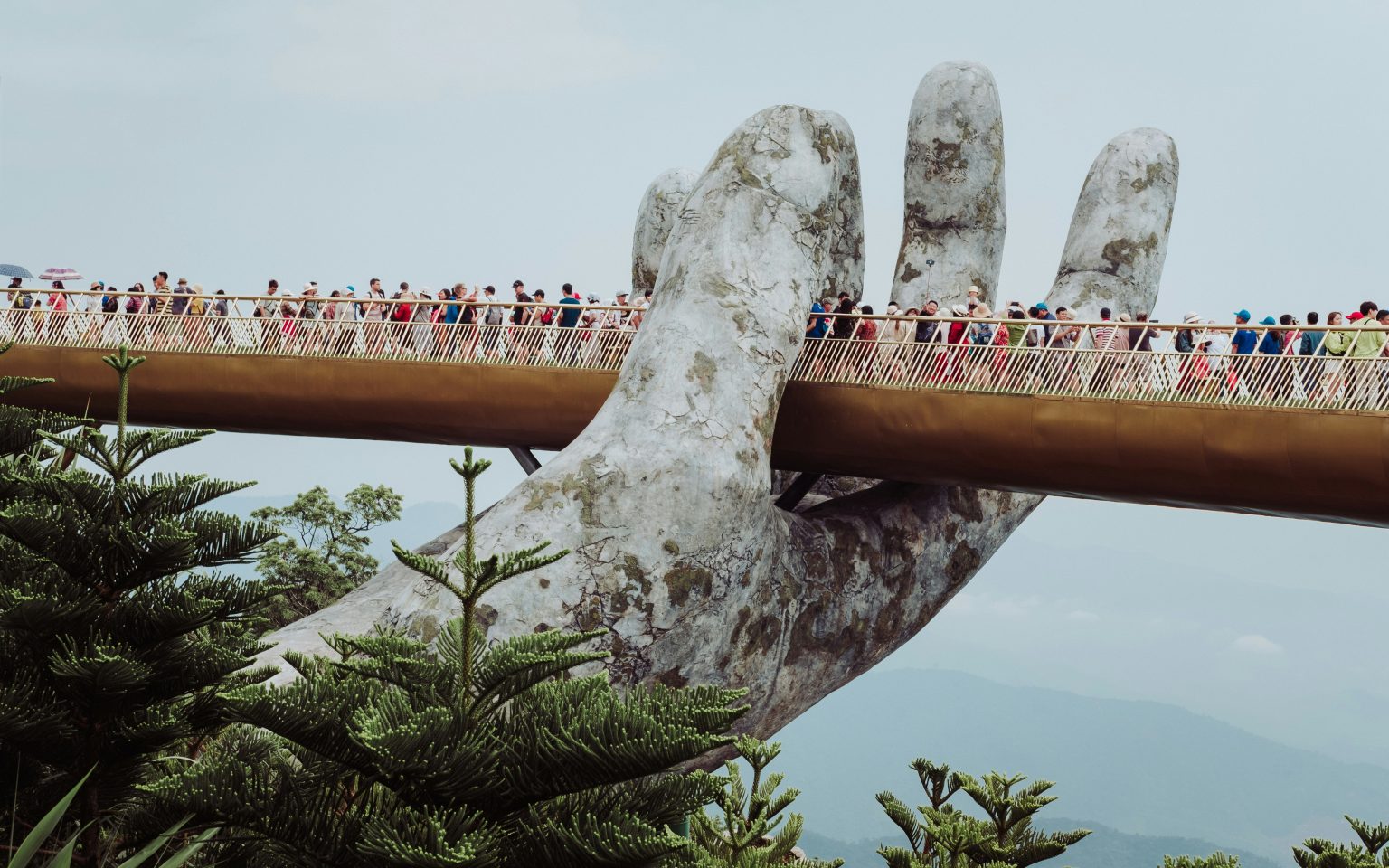
Da Nang is the bridge between the old and the new. Known for its long stretches of white sand beaches and the iconic Golden Bridge held up by two giant stone hands, it has become a hub for digital nomads and luxury travelers alike. The Marble Mountains, a cluster of five limestone hills topped with pagodas and filled with caves, offer a spiritual retreat just minutes from the city center.

The Southern Pulse: Modern Energy and River Rhythms
Southern Vietnam is the economic engine of the country, a land of tropical heat, neon lights, and the vast, fertile expanse of the Mekong Delta.
Ho Chi Minh City: The Beating Heart
Formerly known as Saigon, Ho Chi Minh City is a whirlwind of energy. It is a city of sleek skyscrapers and French colonial landmarks like the Notre Dame Cathedral and the Central Post Office. For history buffs, the War Remnants Museum provides a sobering and essential look at the country’s past, while the Cu Chi Tunnels, located an hour outside the city, showcase the incredible ingenuity of the guerrilla fighters.
In 2026, the city’s rooftop bar scene is world class, providing a bird’s eye view of the glittering skyline. The food scene is equally diverse, ranging from high end fusion restaurants to the legendary street food stalls of Ben Thanh Market. Try a “Banh Mi” from a street vendor; the combination of French baguette and Vietnamese fillings is a perfect metaphor for the city itself.
The Mekong Delta: The Rice Bowl
A few hours south of the city, life slows down as you enter the Mekong Delta. This is a world of water, where the river is the highway. Floating markets like Cai Rang are a spectacle of color and sound, as boats laden with pineapples, watermelons, and coconuts trade in the early morning light.
Exploring the delta in 2026 is best done by staying in a boutique river lodge. You can cycle along the narrow canals, visit local workshops that make coconut candy or rice paper, and listen to “Don Ca Tai Tu,” the traditional folk music of the region. The delta is a reminder of the fertility and abundance of the land.
The Tropical Escape: Phu Quoc and Con Dao
For those seeking a beach finale, the islands of the south are paradise. Phu Quoc has transformed into a world class resort destination, famous for its clear waters and sunset views. Meanwhile, the Con Dao archipelago remains the “hidden gem” for eco luxury. Once a prison island, it is now a protected national park with pristine coral reefs and beaches where sea turtles come to nest.

Practical Wisdom for the 2026 Traveler
To truly experience Vietnam, you must embrace its rhythm. Here are the practical pillars of a successful journey in 2026.
1. The Art of the Slow Journey
Vietnam is not a country to be rushed. Each region has a distinct climate and personality. If you have two weeks, focus on two regions rather than trying to see the entire country. The beauty of Vietnam is found in the “in between” moments—the long train ride along the coast, the slow boat through the delta, or the afternoon spent in a coffee shop watching the rain.
2. Digital Minimalism and Local Connection
While 2026 is a hyper connected era, Vietnam offers a chance to disconnect. Use Grab (the local ride sharing app) for convenience, but once you arrive at your destination, put the phone away. Learn a few basic phrases: “Xin Chào” for hello and “Cảm ơn” for thank you. The Vietnamese people are incredibly warm and appreciative of the effort. Showing genuine interest in a local’s story will lead to experiences that no guide book can provide.
3. Respect the Sacred and the Social
When visiting temples or pagodas, dress modestly by covering your shoulders and knees. In social settings, the concept of “Saving Face” is important. Avoid loud confrontations and always approach disagreements with a smile and patience. If you are invited into a home, it is customary to remove your shoes at the door.
4. Lean into the Culinary Adventure
Vietnamese food is among the healthiest and most varied in the world. Do not be afraid of street food; look for stalls that are busy with locals. In 2026, food hygiene standards are high, and the turnover of ingredients ensures everything is fresh. From the spicy Bun Bo Hue of the center to the sweet treats of the south, let your palate be your guide.
5. Sustainable Choices
Choose tour operators that prioritize the environment and the local community. Avoid activities that involve animal exploitation and be mindful of your plastic usage. Many hotels in Vietnam now provide glass bottles and refill stations, a sign of the country’s growing commitment to preserving its natural beauty.
The Soul of 2026
Vietnam is a country that stays with you. It is the smell of woodsmoke in the mountains, the taste of a fresh coconut on a hot day, and the sight of a thousand lanterns reflected in a river. It is a place that teaches you about the strength of the human spirit and the beauty of the natural world.
As you stand on the deck of a boat in Lan Ha Bay or walk the quiet streets of Hoi An, you will realize that Vietnam is not just a destination; it is a feeling. It is the realization that the world is vast and beautiful, and that we are all just travelers passing through.
The sinuous land of the dragon is waiting for you in 2026. It is ready to share its secrets, its flavors, and its peace. All you have to do is arrive with an open heart and a willingness to see the world in a different light.