




Samoa is a land where time seems to take a deep, rhythmic breath. On January 5, 2026, this independent nation in the South Pacific remains the keeper of “Fa’a Samoa”—the Samoan Way. It is a place where ancient customs, communal living, and an intense respect for the natural world are not just historical footnotes but the lived reality of every citizen. Comprising two main islands, Upolu and Savai’i, along with several smaller islets, Samoa is a lush, volcanic paradise that offers a stark, beautiful contrast to the hyper connected world of the twenty first century.
- The Vibrant Pulse: Upolu Island
- Apia and the Palolo Deep Marine Reserve
- To Sua Ocean Trench: The Icon of the Pacific
- The Waterfalls of the South Coast
- The Wild Frontier: Savai’i Island
- Fa’a Samoa: The Cultural Pillars
- Nature and Conservation in 2026
- Practical Wisdom for the Samoa Traveler
- 1. Respecting Village Protocol
- 2. Embracing “Island Time”
- 3. Staying Safe and Healthy
- 4. Navigating the Islands
- 5. Sustainable Packing
- The Culinary of Samoa
- The Spirit of the Pacific
In 2026, Samoa has become a global leader in community based eco tourism. The islands have resisted the urge to build massive high rise resorts, opting instead for a model that prioritizes the environment and the local villages. Traveling through Samoa is a journey into a landscape of turquoise lagoons, plunging waterfalls, and rainforests so green they appear almost iridescent. This guide explores the essential sights and the cultural heartbeat of these islands, providing a roadmap for those seeking an authentic Polynesian experience.

The Vibrant Pulse: Upolu Island
Upolu is the most populated island and home to the capital city, Apia. It is an island of dramatic contrasts, where the bustling energy of the markets meets the absolute serenity of the coastline.
Apia and the Palolo Deep Marine Reserve
Apia is a charming capital that feels like a large village. The Maketi Fou (Central Market) is the best place to start your journey. Here, you can find mounds of tropical fruits, handmade tapa cloth, and intricately carved wooden bowls. In 2026, the market remains the social hub of the island, a place where you can sample “Samoan Cocoa” and watch the daily life of the locals unfold.
Just a short walk from the city center is the Palolo Deep Marine Reserve. This is a natural hole in the reef that acts as a giant aquarium. Even for those who have snorkeled across the globe, the Palolo Deep is a revelation. Once you swim past the shallow reef flats, the seafloor drops away into a blue abyss filled with walls of coral and thousands of tropical fish. It is one of the few places in the world where you can experience high quality snorkeling within sight of a capital city’s skyline.
To Sua Ocean Trench: The Icon of the Pacific
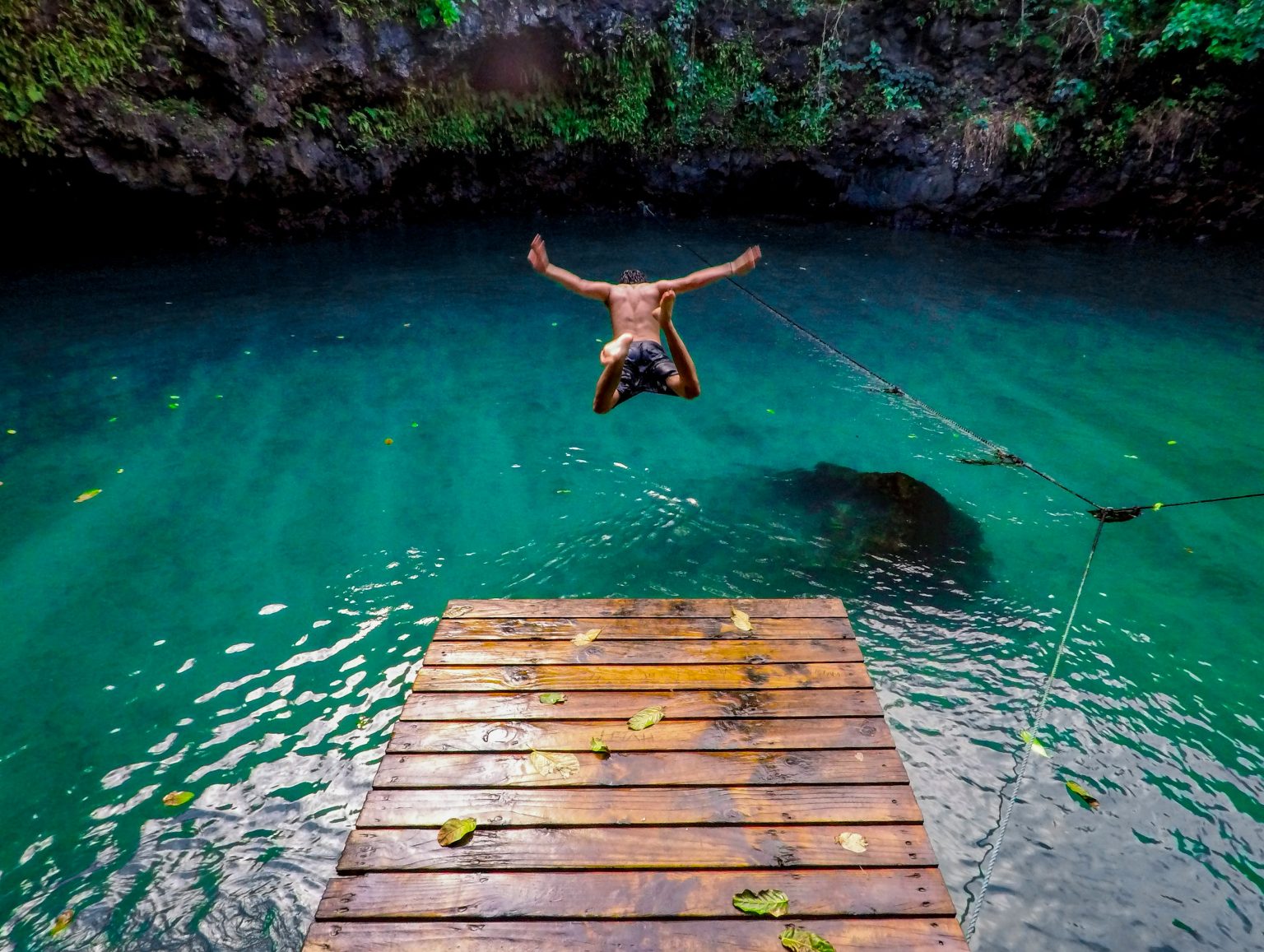
No visit to Samoa is complete without seeing the To Sua Ocean Trench. Located on the southern coast of Upolu, this is perhaps the most photographed natural site in the South Pacific. To Sua literally translates to “Big Hole,” and it is a massive, circular sinkhole surrounded by lush gardens. A long, sturdy wooden ladder leads down to a platform where you can jump into the crystal clear, emerald waters.
The trench is fed by the ocean through a series of underwater tunnels, meaning the water is always fresh and moving with the tides. In 2026, the site is managed with strict conservation guidelines to ensure the surrounding foliage and water quality remain pristine. Swimming in To Sua feels like being inside a secret garden hidden in the middle of the earth.
The Waterfalls of the South Coast
Upolu’s volcanic interior creates some of the most spectacular waterfalls in the region. Sopo’aga Falls is a viewpoint that allows you to see a massive plume of water dropping into a deep, forested gorge. Nearby, Fuipisia Falls offers a similar experience with a dramatic ninety meter drop.
For those who want to get wet, the Togitogiga Waterfall features a series of swimming holes that were once the favored bathing spot for Samoan warriors. These falls are located within a recreation park that is perfect for a midday picnic under the shade of massive banyan trees.
The Wild Frontier: Savai’i Island
Savai’i is the larger but less populated island, often described as the “real” Samoa. It is a place of vast lava fields, rugged cliffs, and some of the most traditional villages in the Pacific. Taking the ferry from Upolu to Savai’i feels like traveling back fifty years in time.
The Saleaula Lava Fields
In the early twentieth century, Mount Matavanu erupted, sending a slow moving river of lava through several villages on the northern coast of Savai’i. Today, the Saleaula Lava Fields stand as a haunting and beautiful reminder of the island’s volcanic power. You can walk across the vast, undulating plains of black basalt and see the ruins of a church where the lava flowed through the doors but left the stone walls standing.
In 2026, the lava fields have become a site for geological education. Local guides explain how the ecosystem has slowly reclaimed the land, with ferns and small trees growing out of the cracks in the black rock. It is a landscape that feels lunar and otherworldly.
The Alofaaga Blowholes
On the southwestern coast of Savai’i, the power of the Pacific Ocean is on full display at the Alofaaga Blowholes. These are vertical tubes in the volcanic rock that connect to the sea. As the waves crash against the coast, water is forced up through the tubes, creating massive geysers that can reach thirty meters into the air.
Local villagers often throw coconuts into the holes just as a wave hits, sending the fruit flying high into the sky. The roar of the ocean and the mist of the salt spray make this one of the most visceral and exciting natural spectacles in Samoa.
Afu Aau Waterfalls
Afu Aau, also known as Olemoe Falls, is a spectacular freshwater spring that plunges from the rainforest into a deep, turquoise pool. The water is remarkably clear and significantly cooler than the ocean, providing a refreshing escape from the tropical heat. The pool is surrounded by steep rock walls and dense ferns, creating a natural amphitheater of green. In 2026, the village that manages the falls has added sustainable pathways and changing facilities that blend seamlessly into the environment.

Fa’a Samoa: The Cultural Pillars
To visit Samoa without engaging with its culture is to miss the true essence of the islands. The social structure is built around the “Matai” (chief) system and the “Aiga” (extended family).
The Fale: Architecture of Openness
The most striking feature of Samoan villages is the “Fale.” These are traditional houses with thatched roofs and no permanent walls. This open design reflects the Samoan values of transparency and community. In 2026, many travelers choose to stay in “Beach Fales.” These are simple huts located right on the sand, allowing you to sleep to the sound of the waves and wake up to the sunrise.
Staying in a beach fale is the ultimate way to embrace the slow rhythm of the islands. You eat your meals communally, often sitting on woven mats, and you learn the importance of the village hierarchy. It is a humble but deeply rewarding way to travel.
The Art of the Tatau
The Samoan tattoo, or “Tatau,” is a rite of passage for men (Soga’imiti) and women (Malu). Unlike modern machine tattooing, the traditional Samoan method uses handmade tools made of bone and wood, which are tapped into the skin with a small mallet. The process is incredibly painful and can take weeks to complete.
In 2026, the art of the tatau is experiencing a global renaissance, but the traditional masters (Tufuga ta tatau) still practice their craft in the villages of Samoa. Watching a tatau session is a powerful experience that demonstrates the endurance and pride of the Samoan people. The patterns are geometric and tell stories of the sea, the land, and the family lineage.
Sunday in Samoa
Sunday is the most important day of the week. The islands essentially shut down as families head to church. Samoan church services are famous for their incredible harmony singing. Even if you are not religious, attending a service is a beautiful cultural experience. Afterward, families gather for the “To’ona’i,” a large traditional Sunday lunch cooked in an “Umu” (earth oven).
The Umu is similar to the Fijian Lovo, using hot volcanic stones to slow cook fish, pork, and root vegetables like taro and breadfruit. The food is then smothered in fresh coconut cream (Peepee). In 2026, many families invite visitors to join their Sunday feast, offering a level of hospitality that is rare in the modern world.
Nature and Conservation in 2026
Samoa has taken significant steps to protect its unique biodiversity. As a traveler, you are part of this conservation effort.
The Sea Turtles of Satoalepai
In the village of Satoalepai on Savai’i, there is a sanctuary for green sea turtles. These creatures are raised in a protected pool until they are large enough to be released into the wild. In 2026, the sanctuary focuses on educational programs that teach visitors about the threats facing marine life in the Pacific. You can swim with these gentle giants in the pool, a quiet and moving experience that highlights the importance of marine protection.
Birdwatching and Rainforest Trekking
The interior of the islands is a haven for rare birds, including the Manumea (tooth billed pigeon), which is the national bird of Samoa. Hiking trails like the Mount Vaea track in Apia—which leads to the tomb of the famous author Robert Louis Stevenson—offer a chance to see these birds and enjoy the lush flora. Stevenson, known to the Samoans as “Tusitala” (Teller of Tales), spent the final years of his life here, and his former home is now a beautifully preserved museum.

Practical Wisdom for the Samoa Traveler
Samoa is a destination that requires a different mindset than most. It is not about luxury and speed; it is about respect and patience.
1. Respecting Village Protocol
Almost all land in Samoa, including the beaches and waterfalls, is owned by local villages. When you visit a site, you will often be asked to pay a small “entry fee” (usually between five and ten Tala). This money goes directly to the village for the maintenance of the site and for community projects.
Always ask for permission before taking photos of people or entering a village area. On Sundays, be particularly mindful of your dress and behavior. Wearing a “lavalava” (sarong) is a great way to show respect for local customs.
2. Embracing “Island Time”
In Samoa, things happen when they happen. The bus might be an hour late, or the shop might close early for a village meeting. Instead of getting frustrated, use these moments to talk to the people around you. Samoans are incredibly friendly and love to share stories. The best experiences in Samoa are often the ones that weren’t on your itinerary.
3. Staying Safe and Healthy
The tropical sun in Samoa is intense. Always wear sun protection and stay hydrated. In 2026, most villages have access to clean drinking water, but it is always wise to use a filtered water bottle. When swimming in the lagoons, be aware of the tides and currents, especially near the reef openings.
4. Navigating the Islands
Renting a car is the best way to explore Upolu and Savai’i at your own pace. The roads are generally good, but you must watch out for stray pigs, chickens, and the occasional sleeping dog. The colorful local buses are a cheaper and much more social alternative. They are often packed with people, produce, and loud music, providing a quintessential Samoan experience.
5. Sustainable Packing
In 2026, Samoa is working hard to manage its waste. Avoid bringing single use plastics to the islands. Use reef safe sunscreen to protect the coral and bring a reusable bag for your market visits. By being a conscious traveler, you help ensure that Samoa remains “the beautiful” for years to come.

The Culinary of Samoa
Samoan food is fresh, simple, and deeply connected to the land and sea.
- Oka: This is the Samoan version of raw fish salad. Fresh tuna is marinated in lime juice and mixed with thick coconut cream, cucumbers, and onions. It is the perfect tropical lunch.
- Palusami: One of the most beloved Samoan dishes. Young taro leaves are filled with coconut cream and onions, wrapped in a larger leaf, and baked in the Umu. The leaves become soft and buttery, creating a rich and savory treat.
- Taro and Breadfruit: These are the staple carbohydrates of the Samoan diet. They are usually boiled or baked in the Umu and have a dense, satisfying texture.
- Fresh Fruit: The abundance of fruit in Samoa is staggering. You can find papayas, mangoes, pineapples, and several varieties of bananas that you have likely never seen before.
The Spirit of the Pacific
As you plan your journey to Samoa in 2026, keep in mind that you are entering a space where the community comes before the individual. This is the secret to Samoa’s beauty. It is a place where nobody is a stranger and everyone is looked after.
When you sit in a beach fale at night, watching the stars over the Pacific and listening to the soft laughter from the neighboring village, you will feel a sense of peace that is rare in the modern world. Samoa doesn’t try to impress you with high tech gadgets or artificial attractions. It impresses you with its honesty, its warmth, and its unwavering commitment to its roots.
The Heart of Polynesia is waiting for you. It is ready to show you its trenches, its blowholes, and its incredible soul. All you have to do is arrive with an open heart and a willingness to walk the “Fa’a Samoa” way.