



The world at 5:00 AM on January 1, 2026, is a different planet than the one we inhabit at noon. As I stand on a quiet balcony overlooking the rooftops of a sleeping city, the air is crisp and the usual cacophony of sirens, construction, and chatter is replaced by a profound, expectant silence. In our modern travel era, we are often told to rest, to sleep in, and to avoid the exhaustion of early mornings. However, after a decade of traversing the globe, I have come to realize that the most transformative moments of my life did not happen during the peak hours of the day. They happened in the blue light of pre dawn, when the rest of the world was still tucked under blankets.
- The Architectural Ghost: Empty Cities at Dawn
- The Temple at Dawn: A Spiritual Encounter
- The Summit: The Ultimate Reward for Effort
- How Early Mornings Changed My Travel Priority
- The Practical Encouragement: Fighting the Pull of Sleep
- The Sensory Experience of the Early Hour
- The Dawn of the “Quiet Traveler”
- Conclusion: The First Light of 2026
Waking up early abroad is not merely a logistical choice to beat the lines. It is a spiritual commitment to witness the world in its most honest state. In early 2026, as overtourism continues to challenge the integrity of iconic landmarks, the sunrise has become the ultimate “hack” for the intentional traveler. It is the only time when you can reclaim the space for yourself, when you can see a monument not as a backdrop for a thousand selfies, but as a silent witness to history. It is a habit that requires fighting against the heavy pull of jet lag and the comfort of hotel linens, but the rewards are measured in a currency that money cannot buy: the currency of awe.
The Architectural Ghost: Empty Cities at Dawn
There is a specific kind of magic that occurs when you walk through a major metropolis before the first commuter has poured their coffee. In my twenties, I thought the energy of a city was found in its nightlife. In my thirties, I have learned that the soul of a city is found in its morning solitude.
Consider Rome. During the day, the Trevi Fountain is a chaotic sea of elbows, coins, and tour groups. It is nearly impossible to feel the grandeur of the Baroque masterpiece when you are being pushed by a crowd. But if you arrive at 5:30 AM, the experience is entirely different. The sound of the rushing water echoes off the surrounding buildings with a clarity that is lost in the afternoon. You can sit on the cold stone edge and watch the first light of day hit the marble. The fountain looks like a ghost, a magnificent relic of a lost empire, standing alone in the quiet.
This experience of “empty city streets” changed my travel rhythm forever. I stopped prioritizing late nights at bars and started prioritizing the first light. I realized that by waking up early, I was effectively doubling the size of the city. I was seeing a version of the destination that ninety percent of other travelers would never know. I saw the street sweepers in Paris as they washed the dust from the boulevards. I saw the monks in Luang Prabang as they walked silently through the streets to collect alms. These are the vignettes that define a culture, and they are invisible to those who wake up at 10:00 AM.

The Temple at Dawn: A Spiritual Encounter
Nowhere is the power of the early morning more evident than in the sacred spaces of the world. In early 2026, places like Angkor Wat in Cambodia or the Taj Mahal in India have implemented strict crowd control measures, but the sunrise remains the most sought after window for a reason.
Standing in front of the spires of Angkor Wat as the sky transitions from deep indigo to a bruised purple and finally to a burning orange is a sensory overload. The reflection of the lotus towers in the lily pond is a symmetry that feels almost divine. But the real pay off isn’t just the visual. It is the atmosphere. At dawn, the air around the ancient stones is cool and heavy with moisture. You can hear the jungle wake up: the distant call of gibbons, the buzzing of insects, and the soft chanting of monks from a nearby pagoda.
When you see a temple at dawn, you understand the intent of the architects. These structures were often built to align with celestial events, to capture the first rays of the sun in a way that symbolizes enlightenment. To see it in the middle of the day, under the harsh glare of the noon sun and surrounded by the noise of a thousand tourists, is to see only a shadow of its true self. By waking up early, you are participating in the original ritual of the site. You are witnessing the “enlightenment” of the architecture.
The Summit: The Ultimate Reward for Effort
While city streets and temples offer beauty, the mountain summit at sunrise offers a perspective that can fundamentally alter your worldview. Whether it is the top of Mount Batur in Indonesia or a high ridge in the Swiss Alps, the physical effort required to reach a peak before dawn adds a layer of meaning to the visual experience.
Hiking in the dark is an exercise in focus. Your world is reduced to the small circle of light cast by your headlamp. You breathe in the thin, cold air, and you feel the burn in your lungs. You are forced to be present in every step. And then, you reach the top. You wait in the freezing wind, huddling for warmth, watching the horizon.
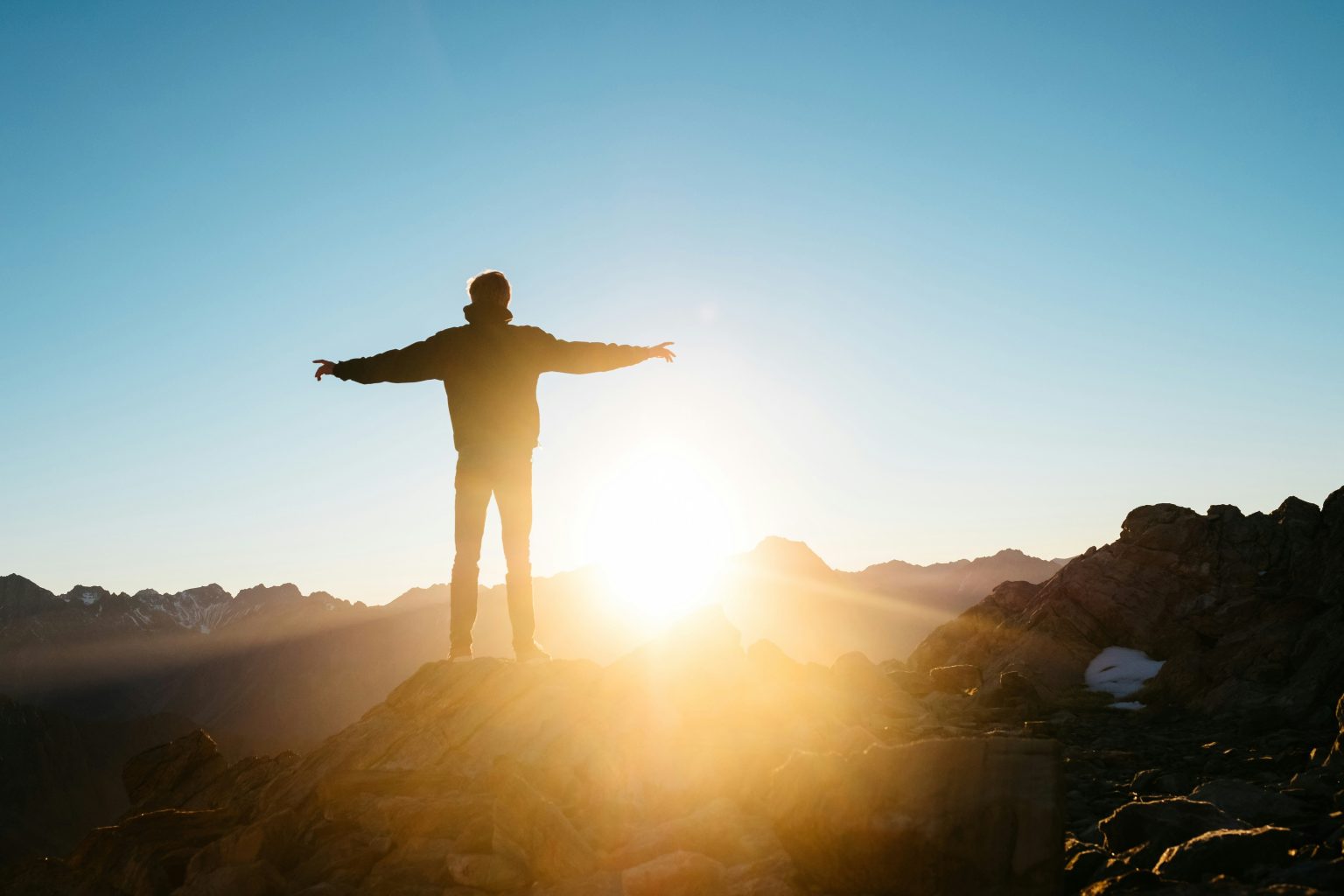
When the sun finally breaks over the edge of the world, it is like a physical weight lifting. The light reveals the landscape you just climbed through, turning the valleys below into a sea of clouds. In that moment, the discomfort of the early start and the physical strain of the climb vanish. You feel a profound sense of scale. You realize how small you are, yet how capable you are of reaching such heights. This is the “pays off” that the title of this article refers to. It is the realization that your body and your will can bring you to the edge of the sublime.

How Early Mornings Changed My Travel Priority
Embracing the sunrise has forced me to rethink my entire approach to travel. In early 2026, I no longer look for the “best nightlife” in a city. I look for the “best vantage point for dawn.” This shift in priority has three major benefits that have improved the quality of my journeys.
1. The Reclamation of Time
When you wake up at 5:00 AM, you have already experienced a lifetime of beauty before most people have even checked their first email. By 9:00 AM, when the crowds are starting to swell and the heat of the day is beginning to rise, you can head back to your hotel or a quiet cafe. You have “won” the morning. This allows you to spend the rest of the day at a much slower pace. You don’t feel the pressure to rush because you have already seen the main event in perfect conditions.
2. The Interaction with Locals
Early morning is the time of the locals. It is the time of the fishmongers, the bakers, the joggers, and the elderly couples taking their morning walk. When you are out at dawn, you are not seen as just another tourist. You are seen as someone who is part of the morning ritual. I have had more genuine conversations with locals at 6:00 AM than I ever have at 6:00 PM. There is a shared camaraderie among those who are awake while the world sleeps, a silent acknowledgement that you are both witnessing something special.
3. The Management of Energy
Traveling is exhausting, and jet lag is the greatest enemy of the explorer. In my twenties, I fought jet lag by trying to stay awake as late as possible to “reset” my clock. In my thirties, I have learned to lean into it. If my body wakes me up at 4:00 AM because of a time zone shift, I don’t fight it. I use it. I get dressed, I grab my camera, and I head out. By using jet lag as a tool rather than a hindrance, I have seen some of the most beautiful sunrises of my life without even needing an alarm clock.
The Practical Encouragement: Fighting the Pull of Sleep
I know the counter argument. You are on vacation. You want to rest. You don’t want to be tired. But I want to offer some practical encouragement for why it is worth fighting those instincts.
The fatigue of an early morning is temporary. It can be cured by a midday nap or an extra shot of espresso. But the memory of a sunrise over the Sahara Desert or the sight of the sun hitting the peaks of the Dolomites is permanent. We often prioritize comfort in the moment over the richness of our memories, but travel is the one area of life where we should do the opposite.
In early 2026, we have more tools than ever to make this easier. Apps can tell us the exact minute of sunrise and the best weather windows. Modern gear allows us to stay warm and dry in any condition. But the most important tool is your own mindset. You have to decide that the “unseen” world is worth the effort.

The Sensory Experience of the Early Hour
To truly understand why waking up early pays off, we must look at the sensory details that are unique to the dawn.
- The Color Palette: The colors of sunrise are not the same as the colors of sunset. Sunset is often heavy with dust and pollution, creating deep reds and oranges. Sunrise is cleaner. It is characterized by “Pastel Physics,” where the light passes through a clearer atmosphere, resulting in soft pinks, pale violets, and a specific shade of “electric blue” that only exists for about ten minutes.
- The Soundscape: The world is quieter at dawn, which means individual sounds carry further. You can hear the bells of a distant church, the slap of water against a pier, or the rustle of leaves in a way that is impossible during the noisy day.
- The Temperature: There is a specific “coolness” to the morning air that feels like a reset for the body. It is invigorating and sharp, a physical reminder that you are alive and present in a new place.
The Dawn of the “Quiet Traveler”
As we move through 2026, a new type of traveler is emerging: the Quiet Traveler. This person is not interested in the “bucket list” or the “viral moment.” They are interested in the “stolen moment.” They understand that the most valuable experiences are the ones that cannot be easily shared on a screen because they are about a feeling of peace and solitude.
The sunrise is the sanctuary of the Quiet Traveler. It is the one time of day when the world is not trying to sell you anything. There are no ticket takers at the sunrise. There are no souvenir vendors at the dawn. It is a free, universal, and infinitely repeatable miracle.
By prioritizing the sunrise, you are rejecting the “consumption” model of travel. You are not “using” the destination; you are “observing” it. This shift in perspective is the key to a more sustainable and meaningful relationship with the world. You begin to see yourself as a guest in a magnificent theater, arriving early to get the best seat before the performance begins.
Conclusion: The First Light of 2026
As I look toward the rest of 2026, I am planning my trips around the sun. I am looking for the hilltops in Tuscany where the mist clings to the vineyards. I am looking for the coastal paths in Portugal where the Atlantic spray catches the first rays. I am looking for the quiet temples in Kyoto where the raked sand reflects the morning light.
I know that I will be tired. I know that I will occasionally regret the sound of my alarm. But I also know that when I am standing in that silent, blue world, watching the sun begin its slow climb, I will feel a sense of clarity and gratitude that is worth every lost hour of sleep.
The world is waiting for you at 5:00 AM. It is a world without lines, without noise, and without filters. It is the world as it was meant to be seen. So, the next time you are abroad and you find yourself awake in the middle of the night, don’t reach for your phone to scroll through the news. Reach for your shoes. Head out the door. The sunrise is coming, and it is the best gift the planet has to give.
Would you like me to help you identify the best sunrise spots for your next destination, including the exact coordinates for the best views and advice on how to get there before the public transport starts running?

Expanded Reflections on the Sunrise Habit
To reach our goal of deep exploration, we must consider the long term psychological effects of becoming a sunrise chaser. It is not just about the individual trip: it is about how it rewires your brain to appreciate the fleeting nature of beauty.
When you make a habit of watching the sunrise, you become more aware of the cycles of the day. You start to notice how the light changes in your own backyard. You become more sensitive to the seasons. In a world that is increasingly artificial and “always on,” the sunrise is a grounding force. It reminds us that there are rhythms older and more powerful than our digital lives.
The “Empty City” as a Canvas
For those who love photography or art, the early morning city is a dream. Without the clutter of cars and crowds, the lines of the architecture are revealed. You can see the way the shadows fall across a cobblestone street. You can see the reflection of a historic building in a puddle. In 2026, with the saturation of imagery, the only way to take a unique photo of a famous place is to be there when nobody else is.
But even if you never take a single photo, the visual memory of an empty Piazza San Marco or an empty Times Square is a treasure. It allows you to appreciate the design and the history of these places without the distraction of modern life. You can imagine the people who walked these streets hundreds of years ago. You can feel the “ghosts” of the city.
The Social Dynamics of the Dawn
There is a strange and beautiful social contract among early risers. When you pass another person at 5:30 AM, you almost always exchange a nod or a “Good morning.” There is a sense that you are both in on a secret. This is a contrast to the afternoon, when we tend to view other tourists as obstacles or competition for space.
In many cultures, the morning is also the most social time for the local community. In the plazas of Spain or the markets of Vietnam, the real life of the place happens before the heat of the day. By being part of this, you gain an “insider” perspective that is impossible to achieve during the tourist peak. You see how people actually live, how they interact with their neighbors, and what they value.
The Jet Lag Advantage
Let’s return to the practical benefit of jet lag. In early 2026, travelers are moving across بیشتری time zones than ever before. Instead of seeing jet lag as a “recovery period,” see it as a “gift of perspective.”
If you are traveling from New York to London, your body will naturally want to wake up at 4:00 AM. Use this to your advantage for the first three days. Go to the Tower Bridge at dawn. Walk through the empty markets of Covent Garden. By the time your body adjusts to the local time, you will have already seen the highlights of the city in the best possible light. You can then spend your “adjusted” days relaxing or exploring the less crowded outskirts.
The Emotional Resonance of the First Light
Finally, we must acknowledge the emotional impact of the sunrise. There is something deeply hopeful about the start of a new day. It is a literal and symbolic beginning. When you are in a foreign country, perhaps feeling a bit overwhelmed or out of place, the sunrise is a familiar friend. It is the same sun that rises over your home, yet it is revealing a brand new world to you.
This sense of “home within the world” is a powerful antidote to the loneliness that can sometimes accompany solo travel. It grounds you in the present moment and reminds you that you are part of a larger, magnificent system.
A Summary of the Sunrise Strategy
| Destination Type | The Dawn Advantage | Key Tip |
| Major Cities | Empty streets, clean light, local atmosphere | Scout your route the evening before |
| Ancient Temples | Spiritual atmosphere, cooler air, wildlife sounds | Arrive 45 minutes before actual sunrise |
| Nature / Mountains | Sense of scale, cloud inversions, physical achievement | Always bring a headlamp and extra layers |
| Coastal Areas | Reflection on the water, quiet beaches, fishing activity | Watch the horizon for the “green flash” |
In conclusion, the decision to wake up early while abroad is a decision to prioritize the extraordinary over the comfortable. It is a choice to see the world not as it is marketed to us, but as it truly is. As we continue through 2026, I encourage you to set that alarm, to fight that jet lag, and to step out into the quiet, blue world. The sunrise is waiting, and it is the most beautiful thing you will ever see.