




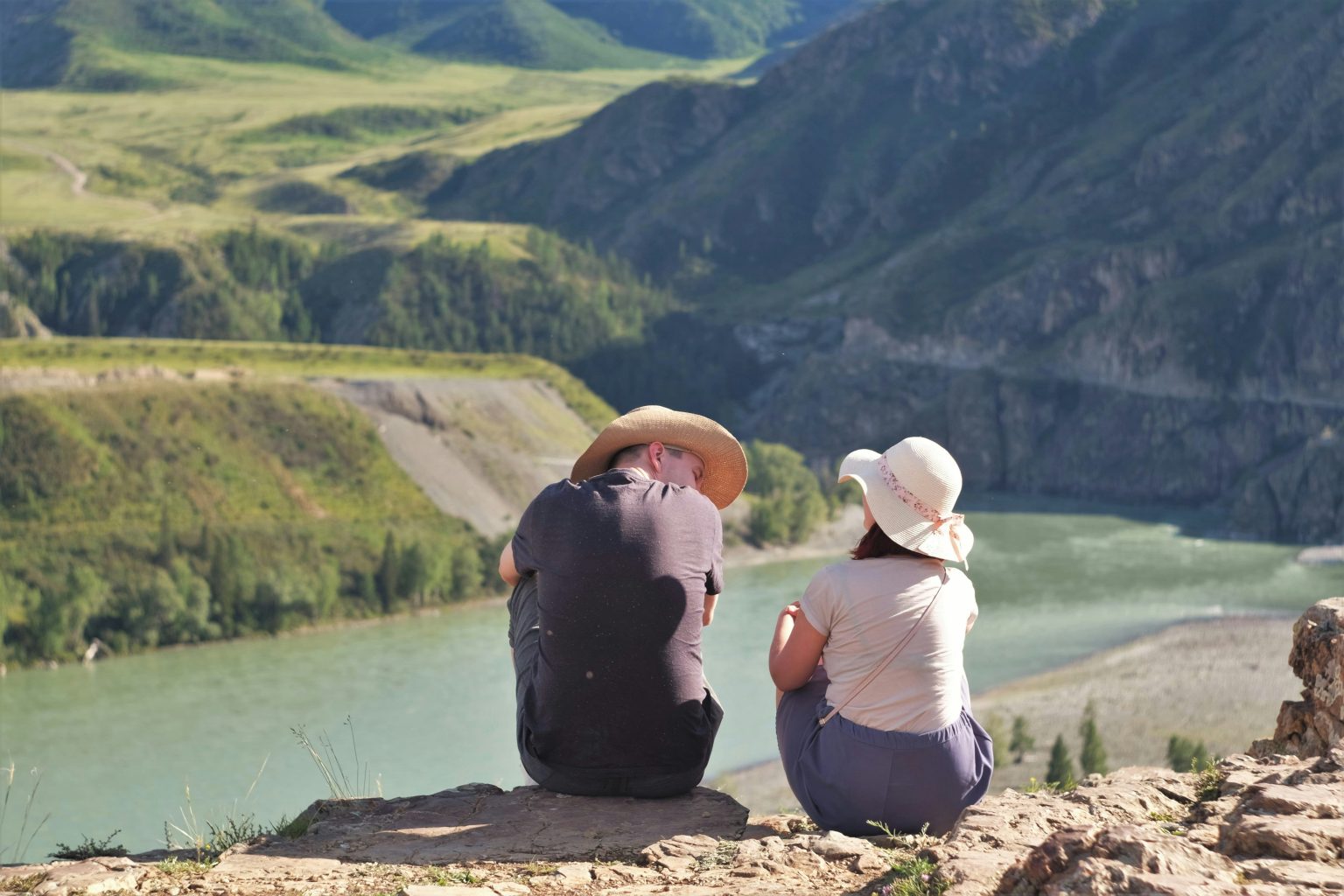
In 2026, the world of travel looks remarkably different than it did a decade ago. We have moved past the frantic era of the early 2020s and settled into a period defined by intentionality, sustainability, and the search for genuine connection. For many of us who spent our twenties as backpackers, chasing cheap flights and sleeping on overnight buses, the transition into our thirties has brought a shift that is as much psychological as it is financial.
- The Financial Paradox: More Money, Less Time
- The Death of FOMO and the Rise of JOMO
- The Evolution of Social Connectivity
- Physical Realities: The Recovery Curve
- The Professional Nomad: Work and Wanderlust
- Destination Selection: The Rise of the “Dupe”
- The Refined Packing List: Quality Over Quantity
- The Evolving Role of Alcohol and Nightlife
- Meaningful Impact and Regenerative Travel
- The Internal Journey
Travel is no longer just about the destination: it is about the “why.” Data from the major 2026 travel reports suggests that travelers aged 25 to 34 are currently the primary trendsetters in the global market. This group, often referred to as “Zillennials” or “Young Millennials,” is taking more trips than any other demographic, averaging over five holidays per year. However, the nature of these trips has evolved. The transition from your twenties to your thirties is not simply about having a larger bank account: it is about a fundamental change in how you perceive time, energy, and the value of an experience.

The Financial Paradox: More Money, Less Time
The most obvious change between these two decades is the budget. In your twenties, money is often the primary constraint. You might have had three months of freedom after university but only three thousand dollars to your name. This led to a specific type of resourcefulness: you would take the six hour bus instead of the one hour flight to save twenty dollars. You would stay in a sixteen bed dorm room because it was eight dollars a night, even if it meant not sleeping because of a snoring roommate.
By the time you reach your thirties in 2026, the situation often flips. You likely have more financial stability, but your time has become your most precious commodity. With career responsibilities and personal commitments, a two week vacation is a rare and valuable window. Consequently, the way you spend your money changes. You are no longer looking for the “cheapest” option: you are looking for the “best value” option.
In 2026, this has given rise to the “Flashpacker” movement. These are travelers in their thirties who still possess the adventurous spirit of a backpacker but refuse to compromise on comfort. They stay in boutique hotels or high end “poshtels” that offer private rooms and designer common areas. They prioritize direct flights and private transfers because spending an extra hundred dollars is worth saving four hours of transit time. This shift is not about being “spoiled”: it is about the realization that you cannot buy back the time you lose to poor logistics.
| Travel Element | The 20s Approach | The 30s Approach (2026) |
| Accommodation | 12 bed hostel dorm | Boutique hotel or private Airbnb |
| Transportation | Budget bus or 3 layover flight | Direct flight or high speed rail |
| Food | Street food and supermarket bread | Local bistros and curated food tours |
| Activity Goal | See every landmark for free | Deep dive into one specific interest |
| Budget Focus | Squeezing every cent | Maximizing every hour |

The Death of FOMO and the Rise of JOMO
In your twenties, travel is often driven by a intense “Fear Of Missing Out” or FOMO. You feel a pressure to see every museum, hit every famous bar, and take every “must do” day trip. Your itinerary is a battle plan. If you go to Paris and don’t see the Louvre, the Eiffel Tower, and Montmartre in forty eight hours, you feel as though you have failed.
In your thirties, this frantic energy begins to dissipate, replaced by the “Joy Of Missing Out” or JOMO. You realize that it is physically and mentally impossible to see everything, and more importantly, that you don’t actually want to. On January 5, 2026, the “slow travel” movement is the dominant philosophy for the thirty something demographic. You might spend four days in Rome and never go near the Colosseum because you found a small neighborhood park where you enjoyed reading your book for three hours every afternoon.
This shift allows for a much deeper level of immersion. When you are not rushing from point A to point B, you begin to notice the nuances of a culture. You learn the name of the person who makes your coffee. You notice how the locals interact with each other. You trade the “checklist” for the “vibe.” This psychological maturity leads to a trip that feels restorative rather than exhausting. You return home feeling as though you have actually lived in a place, rather than just passed through it.
The Evolution of Social Connectivity
One of the greatest myths about traveling in your thirties is that it is lonely compared to the social whirlwind of your twenties. In your twenties, the hostel common room is a hub of constant, albeit often shallow, interaction. You make “best friends” over a game of cards and a cheap beer, only to never speak to them again once you leave for the next city. These connections are easy and plentiful, but they often lack substance.
As you enter your thirties, your social needs change. You are less interested in “collecting” people and more interested in finding “your” people. The 2026 travel landscape has responded to this with the rise of “Whycations” and “Intentional Retreats.” Instead of a random hostel, you might book a week at a specialized photography workshop in Iceland or a culinary retreat in the mountains of Vietnam.
The people you meet in these environments share your specific interests and values. The conversations move past “Where are you from?” and “How long have you been traveling?” to deeper discussions about life, career, and philosophy. Furthermore, solo travel in your thirties is no longer seen as a sign of being “lonely.” It is seen as a sign of confidence. You are comfortable enough in your own skin to eat at a nice restaurant alone, and you find that this independence actually makes you more approachable to locals and fellow travelers alike.
“In my twenties, I traveled to find a party. In my thirties, I travel to find myself, and occasionally, a really excellent glass of wine.”

Physical Realities: The Recovery Curve
We must be intellectually honest about one thing: the body in its thirties does not recover like the body in its twenties. This is perhaps the most humbling change of all. In your twenties, you could stay up until 4:00 AM in a Berlin nightclub, sleep for two hours on a park bench, and be ready for a walking tour by 10:00 AM.
By 2026, the “Wellness” trend has become a necessity for the thirty something traveler. The hangovers are longer, the jet lag is deeper, and the physical toll of carrying a heavy bag is more noticeable. This has led to a major shift in how itineraries are structured. Rest days are no longer a “waste of time”: they are a strategic requirement.
The rise of “Sleep Tourism” in early 2026 is a direct response to this. High end hotels now offer “circadian lighting,” “pillow menus,” and “soundproofing technology” specifically designed to ensure that the traveler wakes up fully restored. When you travel in your thirties, you prioritize your sleep hygiene because you know that a bad night of sleep will ruin your ability to enjoy the following day. You swap the all night party for a sunrise yoga session or a morning hike. You are listening to your body, and your body is rewarding you with a higher quality of presence.
The Professional Nomad: Work and Wanderlust
In 2026, the line between “work” and “travel” has blurred significantly, especially for those in their thirties. While the twenty something traveler is often taking a “gap year” or a “break from reality,” the thirty something traveler is often integrating their work into their journey.
This is the era of the “Professional Nomad.” With over sixty countries now offering digital nomad visas, many people in their thirties are taking “Hush Trips” where they work remotely from a beautiful location without explicitly telling their office, or they are using “Bleisure” (business and leisure) to extend a work trip into a week long exploration.
This changes the logistics of travel. In your twenties, you didn’t care if the hostel Wi Fi was slow. In your thirties, high speed internet and a comfortable desk are not negotiable. You are looking for “Coliving” spaces that provide a professional environment alongside a community of like minded adults. You are balancing your career goals with your travel goals, proving that you don’t have to choose between a successful life and a wandering soul.
Destination Selection: The Rise of the “Dupe”
The way you choose where to go also evolves as you age. In your twenties, you are often drawn to the “icons” of the travel world. You want to see the places you have seen in movies and on social media. You want the “classic” experience.
In your thirties, you often develop a “contrarian” streak. You become wary of “overtourism” and the “Disneyfication” of famous cities. In 2026, the trend of “Destination Dupes” is massive among thirty something travelers. Instead of going to Santorini, which is overcrowded and expensive, you might head to the island of Paros or the coast of Albania. Instead of the Swiss Alps, you might explore the mountains of Georgia or the Dolomites in Italy.
You are looking for “authenticity,” a word that has become the holy grail of 2026 travel. You want to go somewhere that feels real, where the locals are not yet weary of tourists, and where the culture hasn’t been diluted for mass consumption. Your travel choices become an expression of your values: you want your money to go directly to local communities, and you want to leave a positive impact on the places you visit.

The Refined Packing List: Quality Over Quantity
If you look at the backpack of a twenty year old versus the suitcase of a thirty year old, the difference is stark. The twenty year old often has a bag overflowing with “just in case” items: five cheap t shirts, a pair of worn out sneakers, and a heavy paper guidebook. It is a disorganized mess of low quality gear.
The thirty year old traveler in 2026 has embraced the “Minimalist Professional” aesthetic. They have invested in high quality, versatile pieces that work in multiple environments. They have a single pair of high end leather sneakers that look good in a museum and are comfortable enough for a ten mile walk. They have a merino wool shirt that doesn’t hold odors and a “capsule wardrobe” that fits into a carry on bag.
This shift toward “Carry On Only” travel is a hallmark of the thirty something demographic. You have learned through years of experience that “stuff” is a burden. You would rather have three high quality outfits that you love than ten cheap ones that make you feel like a tourist. You have also upgraded your “tech kit”: instead of a tangled mess of cables, you have a streamlined organization system for your laptop, your camera, and your noise canceling headphones.
The Evolving Role of Alcohol and Nightlife
In your twenties, the “nightlife” often is the trip. The primary question is “Where are we drinking tonight?” Travel is a social lubricant, and alcohol is the medium through which you meet people and experience a city.
By the time you reach your thirties, your relationship with nightlife undergoes a significant transformation. You are no longer interested in “all you can drink” hostel pub crawls. Instead, you are interested in “craft.” You would rather spend thirty dollars on a single, perfectly crafted cocktail in a hidden speakeasy than thirty dollars on ten cheap beers in a loud club.
In 2026, we are seeing a huge rise in “Sober Curious” travel. Many people in their thirties are opting for trips where alcohol is not the focus at all. They are interested in tea ceremonies in Kyoto, coffee culture in Addis Ababa, or non alcoholic “spirit” tastings in London. When you do drink, it is an intentional choice: a glass of local wine that perfectly complements your meal, or a traditional spirit that tells the story of a region’s history. You are drinking for the flavor and the culture, not for the buzz.

Meaningful Impact and Regenerative Travel
Finally, the most profound change that occurs in your thirties is a shift from “consumption” to “contribution.” In your twenties, travel is often a selfish act: it is about what the world can give to you. It is about your photos, your stories, and your personal growth.
In your thirties, you begin to ask what you can give back to the world. In 2026, the concept of “Regenerative Travel” has replaced simple sustainability. Travelers in their thirties are looking for ways to leave a place better than they found it. This might mean participating in a “citizen science” project to track coral reef health in the Maldives, or staying at a hotel that is entirely powered by renewable energy and employs only local staff.
You are more aware of your “travel footprint.” You are willing to pay a “carbon tax” or a “climate fee” because you understand the long term impact of your choices. You are not just a visitor: you are a steward of the planet. This sense of responsibility adds a layer of meaning to your travels that was missing in your younger years. You are no longer just seeing the world: you are helping to preserve it.
The Internal Journey
Ultimately, the biggest difference between traveling in your twenties and your thirties is the “internal landscape.” In your twenties, travel is a way to find out who you are. You are trying on different versions of yourself in different cities. You are testing your limits and discovering your preferences.
In your thirties, you generally know who you are. Travel is no longer about “finding yourself”: it is about “expressing yourself.” You travel because it aligns with your values, because it feeds your curiosity, and because it provides the perspective you need to live a better life at home. You are no longer running away from your reality: you are expanding it.
As we move through January 2026, the “age of the intentional traveler” is in full swing. Whether you are twenty two or thirty eight, the world is waiting for you. But if you are currently making the transition into that second decade of exploration, do not fear the loss of your “youthful” energy. What you lose in stamina, you gain in depth. What you lose in spontaneity, you gain in presence. And what you lose in “cheap thrills,” you gain in lasting, soul stirring memories.
The best trip of your life is not the one you took ten years ago: it is the one you are planning right now, with the wisdom of the years behind you and the curiosity of the years ahead.