




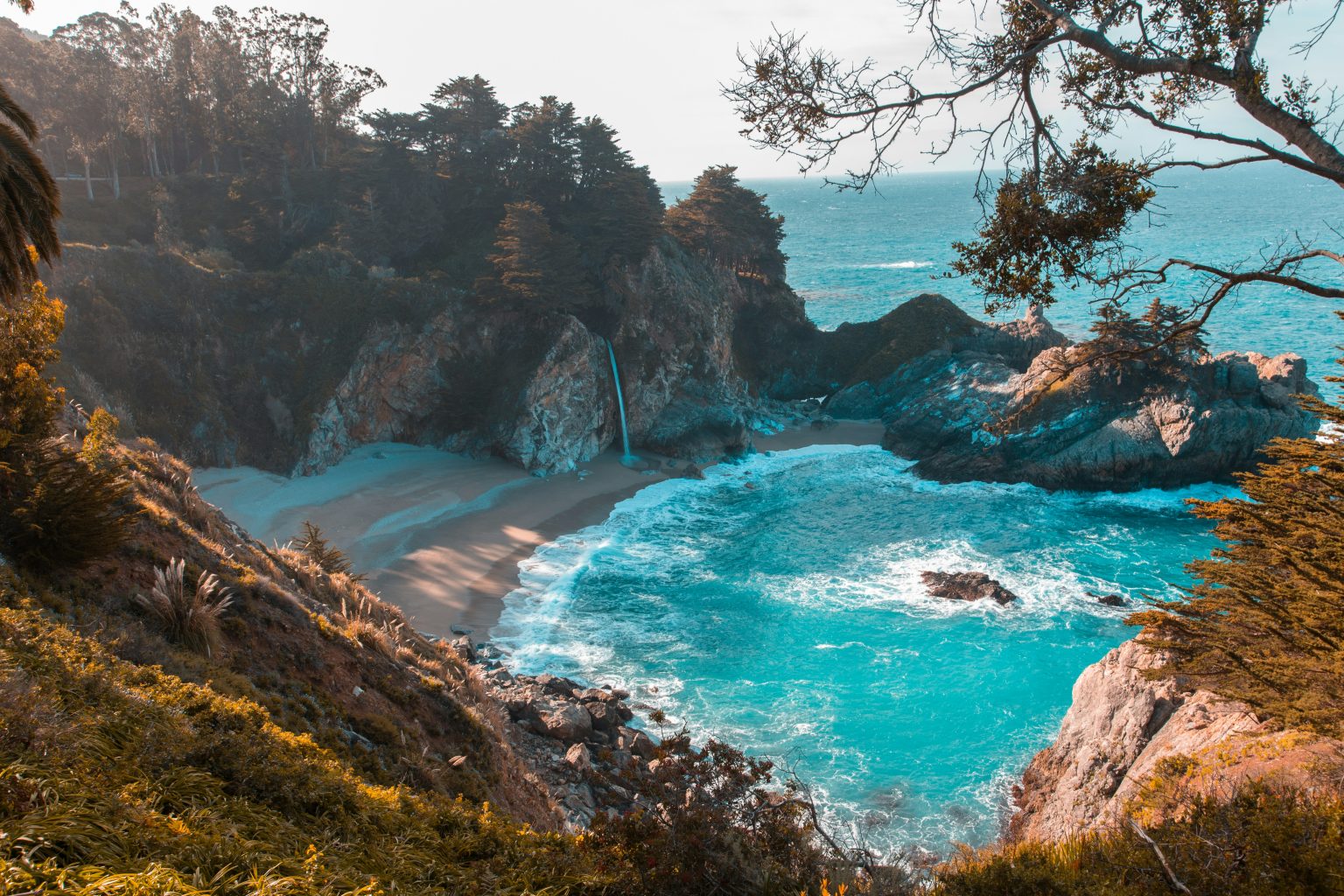
In the digital age of 2026, we are constantly bombarded with high definition imagery of the most beautiful corners of the world. With the latest smartphone cameras utilizing artificial intelligence to enhance colors and sharpen textures, it often feels as though there is no reason to visit a place in person. However, professional photographers will be the first to admit that a two dimensional image can never truly capture the visceral reality of certain landscapes. Today, on January 5, 2026, the travel industry is seeing a massive surge in “sensory tourism,” where travelers seek out destinations that provide a physical and emotional impact that a screen simply cannot replicate.
The problem with photography is that it lacks scale, depth, and the fourth dimension: time. A photo of a canyon cannot convey the silence that rings in your ears. A picture of a salt flat cannot show the way the air feels as it hits your skin at high altitude. As of early 2026, several world famous sites have undergone significant changes in accessibility and infrastructure, making the experience of visiting them even more unique than the photos suggest. Here are five destinations that you must see with your own eyes to truly comprehend.

1. The Grand Canyon: Arizona, USA
The Grand Canyon is the ultimate example of a location that defies photography. You have seen the photos a thousand times, yet nothing prepares you for the moment you step onto the rim. As of January 2026, the National Park Service has implemented a new pricing structure for international visitors, introducing a 100 dollar surcharge to help maintain the delicate infrastructure of this natural wonder. While this has caused some debate among global travelers, those who make the journey find that the experience is worth every cent.
The primary reason a photo fails at the Grand Canyon is the sheer impossibility of capturing its scale. A wide angle lens distorts the perspective, making the distant walls look smaller than they are. When you stand at Mather Point or Bright Angel Trail, your brain actually struggles to process the distance. The far rim can be up to eighteen miles away, yet the air is so clear that it looks close enough to touch. This creates a dizzying sensation of “vertigo” that no image can simulate.
Furthermore, the light in the canyon is constantly in motion. In 2026, with the rise of hyper realistic video, we can see time lapses of the shadows moving across the rock layers, but even these lack the subtlety of the “glow.” During the golden hour, the limestone and sandstone layers begin to vibrate with color, turning from a dull ochre to a brilliant, burning crimson. The canyon is not a static object; it is a breathing, shifting organism of light and shadow.
The New 2026 Visitor Experience
If you are planning a visit in early 2026, be aware of the ongoing construction on the Transcanyon Waterline. Some trail sections may have temporary reroutes, but this has actually opened up “secluded” viewing areas that were previously less accessible. For the premium traveler, the rise of luxury glamping options just outside the park boundaries offers a way to experience the canyon under the stars, away from the crowds of the main lodges. The silence of the canyon at 3:00 AM, under a sky with zero light pollution, is a sensory experience that stays with you for a lifetime.

2. Salar de Uyuni: Bolivia
The Salar de Uyuni is often described as the place where heaven meets earth. Located in the high Altiplano of Bolivia, this ten thousand square kilometer salt flat is a geometric marvel. In photos, it often looks like a flat, white void. However, visiting in person during the current rainy season (which peaks in January and February) reveals a world that is fundamentally different from anything you have ever seen.
When a thin layer of water covers the salt, the entire desert turns into the world’s largest mirror. In a photo, this looks like a cool trick. In person, it is a total loss of depth perception. You cannot tell where the horizon ends and the sky begins. Walking across the mirror feels like floating in a vast, blue infinity. This “white out” effect creates a profound sense of isolation and wonder that many travelers describe as a spiritual experience.
In 2026, the infrastructure around the Salar has evolved to include “premium” nomadic experiences. You can now book luxury airstream campers that are towed into the middle of the salt flat, allowing you to wake up in total solitude. These campers are equipped with high speed satellite internet and sustainable heating systems, providing a bridge between the raw wilderness and modern comfort.
The Physics of the Mirror
The reason photos don’t do it justice is because they cannot capture the “texture” of the salt beneath the water. When you stand on the Salar, you see the hexagonal patterns of the salt crust through the crystal clear water. You hear the crunch of the salt crystals under your boots, a sound that is strangely amplified in the thin mountain air. Additionally, the high altitude (over 3,600 meters) gives the light a piercing quality. The colors of the sunset are more vivid here than almost anywhere else on the planet, with purples and pinks that look like they have been painted onto the sky.

3. Petra: The Rose Red City of Jordan
Petra is currently experiencing a record breaking resurgence in tourism. On December 31, 2025, the site recorded nearly four thousand visitors in a single day, the highest number in years. While the Treasury (Al Khazneh) is the most photographed building in the world, the actual experience of Petra is defined by the journey required to reach it.
To see the Treasury, you must first walk through the Siq, a narrow canyon over a kilometer long with walls reaching up to 200 meters high. A photo of the Siq looks like a nice rock formation. Walking through it is a masterclass in suspense. The air inside the Siq is significantly cooler than the desert outside, and the echoes of horse hooves on the ancient paving stones create a haunting atmosphere. The “reveal” of the Treasury through a tiny crack at the end of the Siq is a cinematic moment that no camera can fully replicate because it lacks the physical buildup of the walk.
In 2026, the “Petra by Night” experience has been completely reimagined. The traditional candles have been replaced with sustainable LED systems that mimic the flicker of real flame while providing better illumination for the intricate carvings. Digital storytelling elements have also been integrated, using subtle audio projections to tell the history of the Nabataeans as you walk.
Beyond the Treasury
Most visitors make the mistake of only seeing the Treasury and leaving. The true beauty of Petra lies in the Monastery (Ad Deir), which requires a climb of over 800 steps. The Monastery is much larger than the Treasury, yet it is rarely photographed from a distance because it is tucked away in the mountains. Standing in front of this massive facade, carved directly into the cliffside, gives you a sense of the “architectural hubris” of the ancient world. The scale is so massive that humans standing at the base look like ants. This perspective is lost in tight, cropped social media photos.

4. The Lofoten Islands: Norway
Norway’s Lofoten Islands are a jagged masterpiece of granite peaks rising directly out of the Arctic Ocean. In photos, they look like a beautiful mountain range. In person, they feel like the end of the world. As of 2026, Norway has introduced a new tourist tax for cruise passengers and overnight guests in popular regions like Lofoten, aimed at preserving the pristine environment from overtourism. This has led to a more “intentional” visitor profile, with more people opting for longer, slow travel stays in traditional fishermen’s cabins known as “rorbuer.”
The magic of Lofoten is the verticality. In most mountain ranges, there is a gradual transition from foothills to peaks. In Lofoten, the mountains are sheer walls that drop thousands of feet straight into the turquoise water. A photo cannot convey the 360 degree immersion of being on a boat in the middle of a fjord, surrounded by these towering giants. The scale is oppressive in the best possible way, making you feel small and insignificant against the power of nature.
The Arctic Light of 2026
If you are visiting now, in early January, you are in the heart of the “blue hour.” During the winter months, the sun barely rises, creating a prolonged twilight where the snow and the sea take on a deep, ethereal blue glow. Photos often struggle with this lighting, either overexposing the snow or losing the detail in the dark water. The human eye, however, can perceive the subtle transitions of color as the Aurora Borealis begins to dance over the peaks. The “flicker” of the Northern Lights is something that high frame rate cameras can capture, but the feeling of the cold air and the silence of the Arctic night is a vital part of the experience that remains unrecordable.

5. The Dolomites: Italy
The Dolomites are unlike any other part of the Alps. While the Swiss or French Alps are defined by glaciers and rounded peaks, the Dolomites are “sculptural.” They are composed of carbonate rock that has been weathered into spires, towers, and massive flat walls. With the 2026 Winter Olympics in Cortina d’Ampezzo just weeks away, the region is currently the center of the travel world.
The phenomenon that photos can never truly capture is the “Enrosadira,” or the alpenglow. Because of the unique chemical composition of the rock, the peaks of the Dolomites turn a vivid, glowing pink and purple at sunrise and sunset. While you can take a photo of a pink mountain, you cannot capture the way the light seems to come from “inside” the rock itself. It is a luminous quality that feels more like a dream than reality.
The Olympic Preparation in Cortina
As of today, January 5, 2026, Cortina is buzzing with excitement. New high speed cable cars have been installed, allowing visitors to reach high altitude viewpoints in minutes. Standing at the top of the Lagazuoi at 2,700 meters, you can see across a sea of peaks that stretches all the way to Austria. A photo of this view looks like a cluttered mess of rocks; in person, you can trace the history of the earth in the folds of the mountains. The Dolomites are a UNESCO World Heritage site for their geological importance, and the “relief” of the landscape provides a three dimensional depth that makes the mountains look like they were carved by a giant’s hand.
Planning Your 2026 Sensory Journey
If you are inspired to see these destinations for yourself, there are several practical considerations for the current travel landscape. The world of 2026 requires more preplanning than in the past, but the rewards are significantly higher.
Visas and Entry Requirements
The European Union has fully implemented the ETIAS (European Travel Information and Authorisation System) as of 2026. If you are traveling to the Dolomites or the Lofoten Islands, ensure you have your digital authorization ready at least 96 hours before departure. Similarly, the United States has expanded its “biometric entry” for international visitors, which has actually made the process at major hubs like LAX and JFK much faster, despite the new park fees.
The Importance of Travel Insurance
In the current climate, comprehensive travel insurance is no longer optional. With the rise of “extreme weather events” globally, ensuring that your flights, accommodations, and medical needs are covered is essential. Many premium credit cards now offer integrated travel insurance, but always check the fine print for “cancel for any reason” clauses, which have become a standard requirement for savvy 2026 travelers.
Booking Luxury and Boutique Stays
The trend for 2026 is “regenerative luxury.” Travelers are moving away from massive hotel chains and toward boutique properties that have a positive impact on the local community. Whether it is a “salt hotel” in Bolivia or an eco lodge in the Dana Biosphere Reserve near Petra, booking these stays months in advance is necessary. These properties often limit their capacity to ensure a high quality experience, and with the current surge in global travel, they are often the first to sell out.
Final Thoughts on the Reality of Travel
We live in a world where we can “see” anything on a screen, but we can “feel” very little through a piece of glass. The five destinations listed here are reminders that the earth is still a place of mystery and immense scale. The Grand Canyon’s depth, the Salar’s infinity, Petra’s history, Lofoten’s verticality, and the Dolomites’ color are all physical truths that require your presence to be fully understood.
As you plan your 2026 adventures, challenge yourself to put the camera down, even if just for an hour. Allow your eyes to adjust to the true colors of the world, and let your skin feel the change in temperature as the sun dips below a horizon that you have traveled thousands of miles to see. The best “photo” you will ever take is the one that stays in your memory, unsharable and perfect.